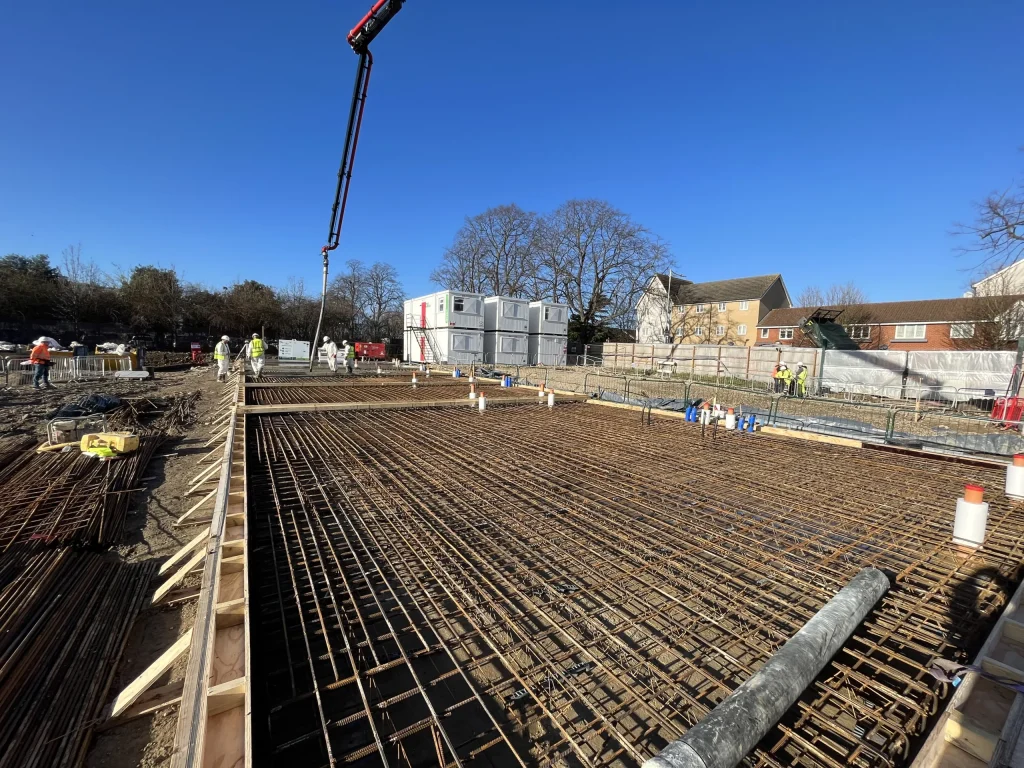

Raft foundations, also known as mat foundations, are an essential solution in construction when dealing with weak soil conditions. These foundations consist of a large continuous slab that spreads across the entire footprint of a building or structure. The primary purpose of raft foundations is to distribute the load from the superstructure evenly over a broad area, reducing stress on any particular point and preventing excessive settlement or differential movement.
Weak soils present significant challenges in construction due to their low bearing capacity and high compressibility. Such soils include soft clays, silts, peat, or loose sands that cannot adequately support traditional strip or isolated footings without risking structural instability. In these scenarios, raft foundations become particularly advantageous because they provide a stable base by engaging the soil over a larger surface area rather than concentrating loads at discrete points.
One of the key benefits of raft foundations in weak soil conditions is their ability to minimize differential settlement. Differential settlement occurs when different parts of a structure settle unevenly due to varying soil properties beneath them. This can lead to cracks and structural damage over time. Since raft foundations act as one unified platform supporting the entire building load uniformly, they help mitigate this risk significantly.
The design process for raft foundations involves careful geotechnical investigation to assess soil properties such as bearing capacity, compressibility, water table level, and potential for consolidation settlements. Engineers typically perform detailed analysis using methods like finite element modeling to predict how both the foundation and underlying soils will behave under various loading scenarios. Based on these insights, appropriate thicknesses and reinforcement layouts are determined for the concrete slab.
In addition to stability considerations, raft foundations offer practical advantages during construction on weak soils. They often require less excavation compared to deep foundation systems like piles or caissons while still providing adequate support for heavy structures such as multi-story buildings or industrial facilities. Moreover, rafts can be constructed relatively quickly using reinforced concrete techniques which reduces overall project timelines.
However, proper waterproofing measures must be incorporated into raft foundation designs if groundwater levels are high since prolonged exposure can deteriorate concrete quality over time. Drainage solutions may also be necessary around the perimeter to prevent water accumulation beneath the slab.
In conclusion, raft foundations serve as an effective engineering strategy for constructing safe and durable buildings on weak soil deposits where conventional footing systems might fail. By distributing loads evenly across extensive areas and minimizing differential settlements through robust design practices grounded in thorough geotechnical analysis, these foundation types ensure long-term performance even under challenging subsurface conditions commonly encountered worldwide in modern construction projects.